
The problem
A claim can lose its date, source, and context by the time it reaches your feed.

Know what is real before it spreads.
Check viral posts, videos, screenshots, links, and forwarded messages with a verdict that stays readable: claim, context, confidence, and sources.
TruthBubble in action
From claim to verdict, without the noise
A claim can lose its date, source, and context by the time it reaches your feed.
It turns a doubtful post, video, screenshot, or link into one focused check.
You get a verdict, a plain explanation, and sources you can open for yourself.
TruthBubble is designed for user-chosen checks. The goal is to help you inspect a claim, not silently watch everything you do.
Check a claim
Paste one clear statement. TruthBubble will open a focused checking page with the verdict, reasoning, and sources kept in one readable place.
The product idea
TruthBubble is built for the exact moment when a post feels urgent, emotional, or too clean to trust. It slows the moment down just enough to show what can be checked.
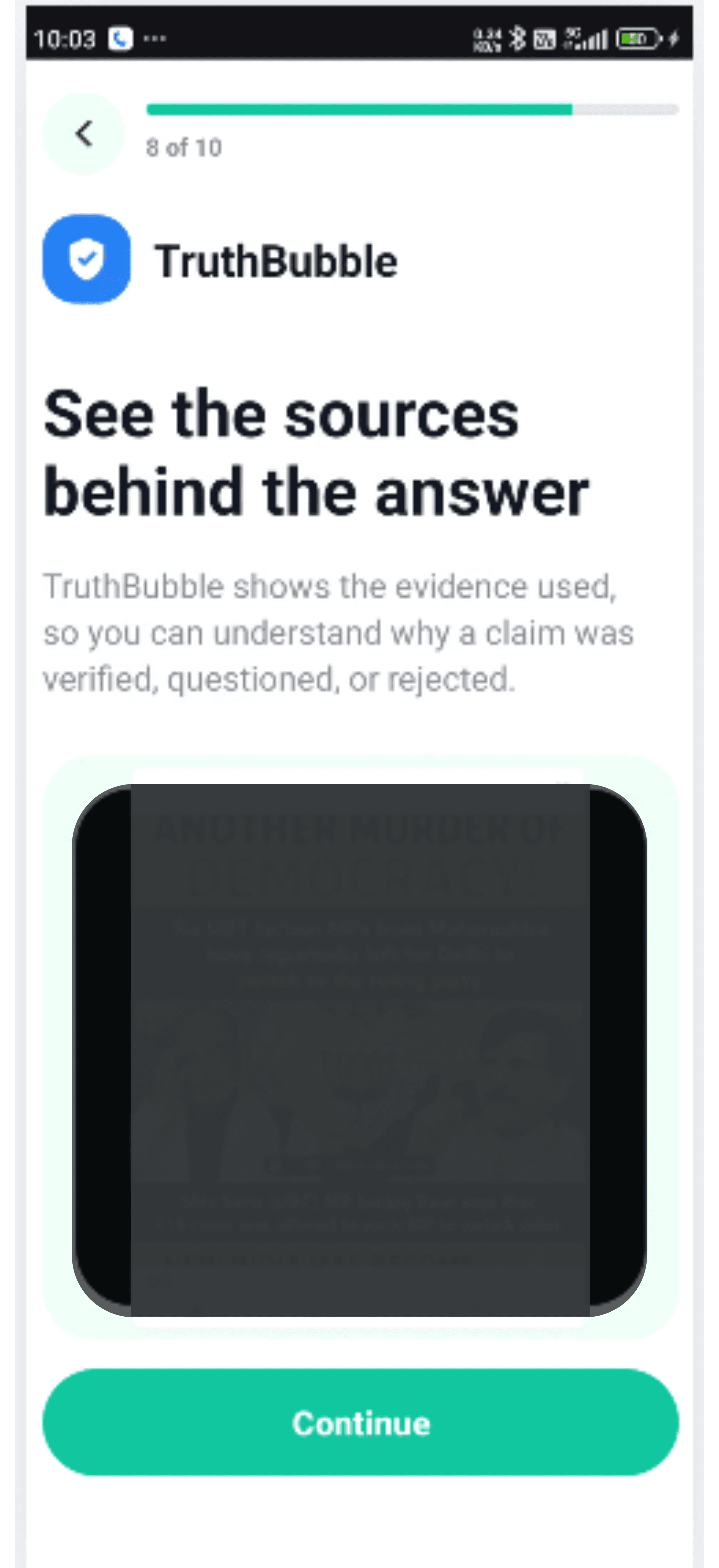
Share the content, or use the Android flow during beta. TruthBubble extracts the checkable claim, compares available evidence, and returns a result that a normal person can read.
The point is not to sound like a machine. The point is to help people ask better questions before they pass something on.
How it works
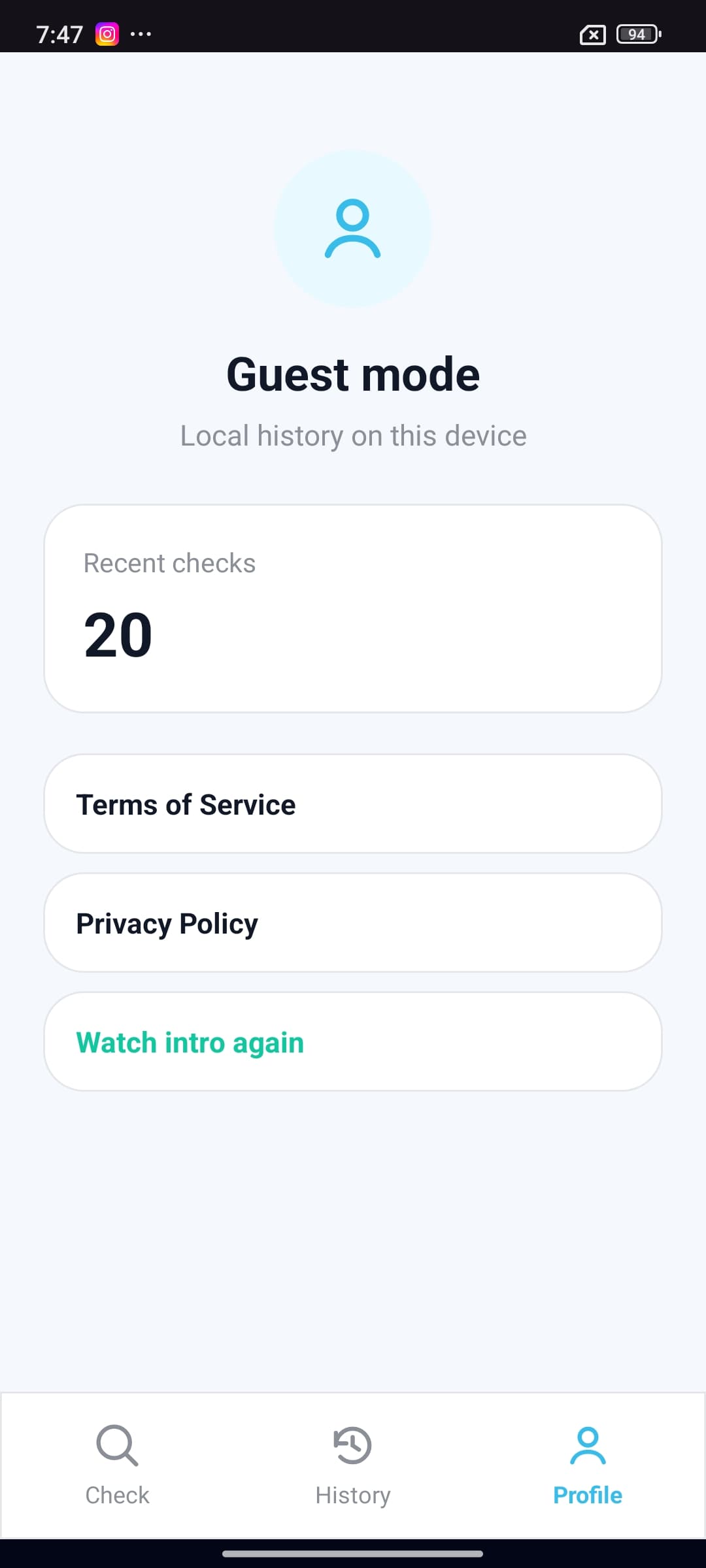
The experience is deliberately short. The evidence work can go deeper in the background, but the user result should stay human.
Paste a line, share a link, or use the Android beta flow for screenshots and videos.
TruthBubble looks for dates, source signals, contradicting evidence, and missing context.
The result explains what is supported, what is unclear, and which sources are useful.
Where it fits
The beta begins with Android early access, then grows toward browser and platform workflows as the core experience improves.
 Instagram
 YouTube
 TikTok
 Facebook
 X
X Chrome
 Edge
Edge Safari
 Firefox
Key features
TruthBubble should feel like a practical tool: careful wording, readable evidence, and clear boundaries around what the product knows.
Separates the factual statement from captions, comments, and emotional framing.
Keeps useful references close to the result instead of asking users to start over.
Shows when evidence is incomplete, mixed, recent, or too weak for a firm verdict.
The beta is shaped around the messy content people actually receive and share.
Example result
Claim
A viral post says a video proves an event happened today.
What the check looks for
Original upload date, visible location clues, reliable reporting, and contradictory copies.
What the user sees
A short explanation, confidence where supported, and source links.
Verdicts
TruthBubble avoids showing backend processing language to users. The public view should stay focused on the claim, the verdict, why it was reached, and what evidence was available.
Trust
TruthBubble is for creators, students, journalists, families, and everyday users who want a cleaner way to question online claims.
"The best fact-checking experience should not make people feel foolish for asking. It should make the next step obvious: what is the claim, what is the evidence, and what is still uncertain?"
TruthBubble product principle
FAQ
TruthBubble is still early. The website should be honest about what exists, what is planned, and where automated checks have limits.
TruthBubble is accepting early-access requests. Android testing comes first, then wider platform support follows as the product stabilizes.
The product is being built for posts, screenshots, links, forwarded messages, reels, and short videos. Some media features may arrive in stages during beta.
No. Some claims do not have enough reliable evidence. TruthBubble should say that clearly instead of forcing a verdict.
No. It helps people slow down, inspect context, and open sources before believing or sharing something important.
Join the Android testing group, try TruthBubble on the content you already see, and tell us where the experience needs to improve.